Some jobs are more personal than others. This one brought several generations of my family into the same piece of ironwork.
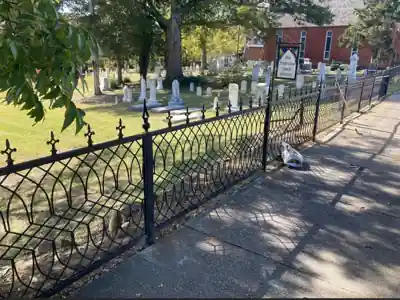
The family connection is what made this project different.
Before the current Artisan Ironworks relaunch, I worked alongside my father restoring and reworking old railing panels at Old Presbyterian Cemetery in Lancaster, South Carolina.
What made the project unusual was that my great-great-grandfather had built the original railings. Generations later, my dad and I were back in the shop working on the same ironwork, repairing it instead of replacing it and getting it ready to return to the cemetery.
This was true wrought iron, not modern mild steel.
Most ornamental work today is fabricated from modern mild steel. It is relatively uniform material, and once you know what you are working with it tends to cut, grind and weld predictably.
Old wrought iron is different. Traditional wrought iron contains slag worked into the iron during manufacturing. As the material is forged and rolled, those inclusions stretch with it and create a fibrous grain structure. On old material, that structure can become visible when a piece is cut, fractured or heavily worked.
That character is part of what makes historic wrought iron worth preserving. It is also part of what makes repairing it more complicated than welding a fresh piece of milled steel.
Welding old wrought iron makes you slow down.
A joint that would be routine on new steel can behave very differently when the base material is old wrought iron. The slag stringers in the metal can interfere with a modern weld, while decades of corrosion, coatings, contamination and previous repairs add another layer of uncertainty.
Sometimes material that appears solid from the outside starts to separate along those old fibers once you grind into it. That means preparation matters. You clean back to sound material, pay attention to what the iron is doing, control the heat and avoid assuming every section will respond the same way.
The goal is not to bury the original work under oversized repair welds. It is to make the repair while disturbing as little of the surviving historic material as practical.
The goal was preservation, not replacement.
We could have duplicated the panels in modern steel. In some ways that would have been easier. New material would have been straight, consistent and predictable.
But then they would not have been these railings anymore.
The bends, small inconsistencies and evidence of how they were originally made are part of the piece. With restoration work, perfection is not always the goal. Preservation is. We repaired what needed repairing, reworked sections where necessary and kept as much of the original wrought iron as we reasonably could.
Then the panels went back where they belonged.
After the shop work was complete, the restored sections were returned to Old Presbyterian Cemetery and installed back on site.
There was something surreal about putting ironwork back in place that someone in my own family had stood at a forge or workbench building generations earlier. My great-great-grandfather built it. Years later, my dad and I got to put our hands on it again and help keep it standing.
The project also received local newspaper coverage when the restored railing returned to the cemetery, but the family connection is the part that has always stuck with me.
Old work still influences how I build new work.
You learn a lot by taking apart work that has already survived for generations. You see which joints lasted, which details held up, where corrosion found its way in and which decisions somebody made decades ago turned out to be good ones.
Occasionally, the person whose work you are studying happens to be your great-great-grandfather. That is a pretty good reminder to build things with the expectation that somebody else may be looking at your welds a long time from now.
Have old ironwork worth saving?
Send a few photos and tell us what you are working with. We can talk through whether repair, modification or replacement makes the most sense.